
Normal, Normal, Normal...Grief
Yes, I look fine. No, nothing is fine

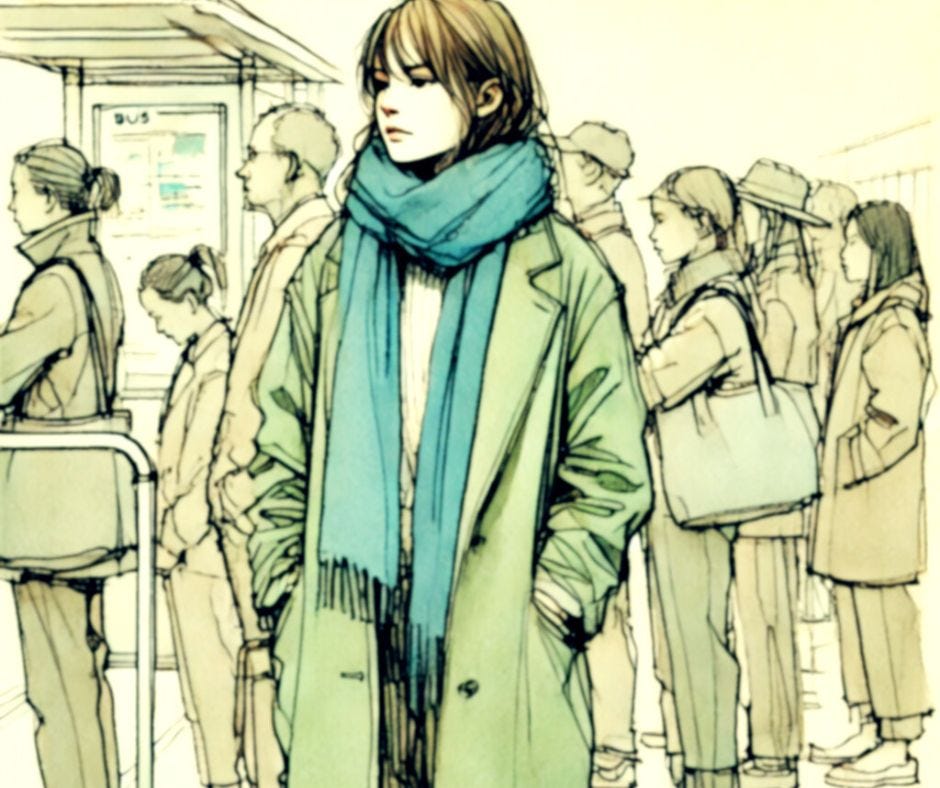
That is how it happens most of the time. There is nothing dramatic leading up to it. No warning. No buildup. I can be doing something completely ordinary. Walking. Talking. Answering a question. Laughing at something that actually is funny.
And then I remember.
The moment thins. Whatever I was doing keeps going, but my attention slides elsewhere. Back to what is missing. Back to what never leaves.
There is a familiar tightening inside of me. Not panic. Not even sadness exactly. Just recognition.
Normal, normal, normal… then grief.
Ah, there it is again.
But the truth is, it never really leaves, does it?
There is never a time when I forget. There is never a second that I am not aware of what is missing, of who is missing.
“Normal” does not mean untouched. It does not mean healed. It does not mean that grief has loosened its hold on me. Normal simply means I am moving in rhythm with the moment in front of me. I am answering the question that was asked. I am laughing because something is funny. I am doing what the situation requires. I am functioning in the moment.
But the grief does not poof-disappear during those moments. It does not take a short leave of absence. It stays exactly where it always is. Even when under the surface, it is always present.
Normal is often mistaken for All Better Now.
When people see us functioning, responding, laughing, showing up, doing the things, they assume our grief has resolved. That it must be over. That we have adjusted to this new reality and found our way back to the real world again. They read normal as a sign that we are back to ourselves.
And you know what? It makes this even harder- how easily normal gets misread.
When people assume I’m ok because I look normal, it just adds another layer to carry. Not because they mean harm. Most of the time, they don’t. But the misunderstanding itself is exhausting. It asks me to either correct them or quietly hold the truth by myself. There is so much loneliness in that.
Because now I’m not only managing my grief, I’m also managing other people’s comfort with it. Deciding when to speak up and when to let it go. Weighing whether it’s worth explaining that I’m simply functioning, not fine. Present, not healed.
Sometimes it’s easier to let them think I’m ok.
Sometimes I don’t have the energy to say, this still hurts, or this still matters, or I am still changed. So I nod. I smile. I move on. And the grief stays with me, unspoken, heavier because it is unavoidably carried alone.
Because I know people are relieved, happy even, at the thought that I am back to my old self...finally.
But there is no “back.”
If you are reading this, you probably understand that now, too.
The version of me that existed before loss does not exist anymore. I did not step away temporarily. I did not wander off and then return. Something essential was lost. The life I had ended. The person I was inside it ended too. This was not a pause or a detour. It was an ending. Not only of my loved one, but of the me that lived with them.
Normal does not resurrect either of them. It does not return me to what I was or restore what my life was then. It only means I have learned how to stand in this place I am left. Because we learn to, even when we don’t want to.
Normal also gets mistaken for healed.
As if grief is an injury, a simple wound that needs the right bandaid and some antibiotic cream. Something that happened once, and wasn’t that a sad situation? But happily, it’s in the past.
They think it is something you treated, with time or therapy or a socially acceptable amount of tears, and it is a wound that closed up cleanly. Like a scar you can show someone and explain how you got it, where it started, where it ended.
Grief is not that.
There is no “all better now” story that makes sense. Nothing fixed, nothing finished. Grief is not something that healed over. It is something I live with.
I am not who I was.
I don’t know how else to say that. I don’t know how anyone could expect it to be otherwise. Something essential (definition of essential: a thing that is absolutely necessary) was taken from my life. Of course, I am different. Of course, I am changed.
How could I not be?
Loss like this moves through everything. It reshapes the way you see, the way you respond, the way you exist. I am still here, yes. I am functioning. I am participating. But I am not the same person.
And I kind of wish people could understand that. Because I look... normal.
If you are grieving, this rhythm is the way you keep going. Normal is how we get through the day. It is how we answer emails, feed ourselves, show up to work, care for other people, and make it to the next hour without collapsing under the full weight of what we carry. If grief stayed fully in the foreground all the time, many of us would not survive it.
So the mind and body do something incredibly intelligent, I think. They let normal take over for a while. They allow attention to narrow. They let us engage with what is directly in front of us so we can keep moving.
And then grief returns.
Boom, hello, did you miss me? No? Too bad, I am back.
You did not suddenly do something wrong. This is the only sustainable way to live after loss. Back and forth. Normal, then grief. Engagement, then awareness. Over and over again.
And sometimes, those long stretches of normal can feel wrong.
Not because we’re doing anything unhealthy. Not because we’re avoiding our grief. But because being normal was never the goal. Normal is not what we want. Normal is what we settle for because it’s the only way to keep going.
Normal can start to feel uncomfortable the longer it lasts. Like we’re drifting too far from the life we lost. From the person who is missing. From the version of ourselves that existed alongside them. There can be guilt in it. A sense that if we stay normal too long, something important is being left behind.
We don’t actually want normal.
We want before.
We want them.
We want the life where none of this was necessary in the first place.
So when grief shows up again, even though it hurts, it can also feel strangely grounding. Not comforting. Not welcome. Just familiar. Like something true has stepped back into the room with us once again.
And then normal returns.
I answer the next question. I take the next step. I rejoin the moment. From the outside, nothing looks different.
Normal, normal, normal… then grief.
And this is how the day continues.
If you feel unsettled by how normal you can be sometimes, there is nothing wrong with you. That tension, the literal see-saw that you seem to be living on, doesn’t mean you’re doing grief incorrectly.
Normal keeps us alive. Grief keeps us connected.
And most of us are learning how to live somewhere in between.
So if this is your rhythm too, if you find yourself moving back and forth between normal and grief, you are not alone in it. Many of us are learning how to live this way now. Not by choosing it, not by liking it, but by staying. By adjusting. By continuing to show up inside lives that changed without our consent.
One ordinary moment at a time.
One remembering.
One return.
This is how we do it.
Yes and yes. Thank you for giving my feelings words🦋💔
I want after.